Poor blog. I think I should revive you somehow except I don't know what to write about. I feel my day to day life is a bit meh and same old same old. I have no energy to rant about stuff that outrages me, I keep forgetting to take photos of the delicious food I have made. Then I feel this blog has baggage and I should start afresh, but then I quite like how long this one is already.
Anyhoo I guess I should just write something.
I have spent today trying to write my catalogue essay about this fellow to the left. Good ole William Kent. Have been having serious issues as it is a commissioned essay on something specific, but I have already published an article on this topic and I feel I can't write the same thing again. It hopefully doesn't matter that it is on something very similar, and this chapter will be longer with more discussion (and frankly we all know of many academics who write the same article over and over and over again). But whenever I try to write it the already written article comes back to haunt me. I am actually making a little bit of progress this evening. Though I am frustrated with people who don't specify what dating they are using. England was one of the the last countries in Europe to adopt the Gregorian calendar. So until 1752 the new started in March, so a letter dated January 1720, in fact refers to January 1719 according to the modern calendar. however, it is never clear whether republished letters have had their dates adjusted. Of course a writer should specify but many don't and I am left wondering if they even realise the issue. Also if someone is writing a letter from England to continental Europe you can't be certain whether they are using their date or the date of the person receiving it. SO CONFUSING. These are my troubles. Anyway back to it.
BYEEEEE.xx


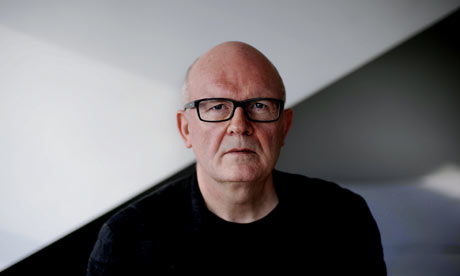
'Far ahead of the rest of the literary world' ... Gordon Burn. Photograph: Sarah Lee
The writer and novelist Gordon Burn, whose work explored the boundaries between fact and fiction, has died aged 61, his publisher announced today. Burn died on Friday 17 July, having been suffering from cancer.
Burn examined the contemporary obsession with celebrity in a series of books spanning three decades, including an account of the Yorkshire Ripper, a study of Fred and Rosemary West and a Whitbread award-wininng novel which imagined an alternative life for the British singer Alma Cogan.
His editor at Faber, Lee Brackstone, hailed his work as "far ahead of the rest of the literary world", and lamented the loss of "one of the great literary innovators of these times".
"Gordon's subject of choice was often trauma, spectacle and dysfunction," Brackstone said. "He was drawn to the dark side of celebrity ... his literature and impulse always represented to me an attempt to find comfort, meaning and compassion in the most appalling or baffling of events."
For the author himself, the central role of fame and mortality in his own work was clear. "Almost everything I have written," Burn said last year, "has been about celebrity, and how for most people celebrity is a kind of death."
Born in Newcastle on 16 January 1948, Burn began work as a journalist, writing for publications such as the Guardian, Rolling Stone and Esquire and remained a prolific interviewer and feature writer, making a name in recent years as an expert on contemporary art. Deliberately following in the footsteps of In Cold Blood and The Executioner's Song, his first book, Somebody's Husband, Somebody's Son, was an attempt to tell the story of the Yorkshire Ripper from the inside out; he spent three years getting to know Peter Sutcliffe's family after the killer's conviction in 1981, turning up night after night to hear stories of the murderer's early life. He turned next to the world of professional snooker, at its zenith during the era of Steve Davies and Dennis Taylor, following the circus for a year to research Pocket Money, published in 1986.
His first novel, Alma Cogan, revisited questions of death and fame, entwining the case of the Moors murderer Myra Hindley with an imaginary post-celebrity existence for the popular singer, who died in 1966, in a meditation on artifice and obscurity which won the Whitbread first novel prize in 1992. Novels of Fleet Street and showbiz followed with 1995's Fullalove and 2003's The North of England Home Service, but it was with his most recent novel, 2008's Born Yesterday, that Burn's fiction reached its logical conclusion. Hatched in a discussion over dinner with the CEO of Faber, Stephen Page, the book was an attempt to bring the non-fiction novel into the era of 24-hour rolling news.
"The idea was to find a story, and the moment the news explosion happened to go there and write about it, turn it into a novel in the way that happens all the time through rolling news, newspapers, blogging," Burns explained. "And to turn it around fast, so that the novel came out while the news coverage was still fresh in people's minds."
For Brackstone, Born Yesterday was "an experiment as brave as anything attempted by Pound, BS Johnson, or Foster Wallace". "Having worked as a journalist with a sharp eye for a story in the 70s, Gordon understood, questioned and celebrated, more than any of his peers, the advent of 24-hour news on loop - the pornographic, compulsive intensity of it," Brackstone said. Written in a burst of just over a month at the beginning of 2008, the novel shapes the extraordinary events of the summer of 2007, including the resignation of Tony Blair and the disappearance of Madeleine McCann, into the dream-like vision of an insomniac version of Burn himself. As a cast garnered from the blaring headlines of 24-hour breaking news – Kate Middleton, Carol Thatcher, Jacqui Smith – crosses the boundary between fact and fiction, Burn confronts the subject which governed his writing life: the limits imposed on fiction and non-fiction alike.
"The news is always holding out the promise that we will know more and more and more, but we don't," Burn said. "With the West case, I had everything: I had access to their belongings, to the police interviews – everything, basically, that you could possibly wish to get – and you spend three years writing a book, and you still don't know what made these two people do the kind of things that they did."